 SEOSEO Web Design: Building a Website That Ranks From Day OneWhat SEO web design involves, what technical SEO means for a new site, how to protect rankings in a redesign, and what to ask a web design service.
What Is SEO? How Search Engine Optimization Works
What SEO means, what it stands for, how search engines crawl, index and rank pages, and the best practices US businesses should start with.

What is SEO? SEO, short for search engine optimization, is the work of making your website easier for search engines to find, understand, and recommend, so more of the right people reach you without paid ads. It covers how your site is built, what your pages say, and how other sites and people talk about you. Done well, it turns searches like the ones your customers type every day into steady visits, calls, and sales.
This guide explains what SEO is, what the letters stand for, how search engines decide what to show, and the basic practices that matter most. It is written for US business owners and marketers who want a clear starting point before they invest time or budget.
What is SEO? The meaning in plain terms
SEO stands for search engine optimization. "Search engine" mostly means Google, with Bing and others also in the mix. "Optimization" means improving your website so it matches what people are searching for, and so search engines can read it easily.
When someone searches for "accountant in Austin" or "how to fix a leaking faucet," the search engine shows a page of results. SEO is about earning a place on that page through the quality and relevance of your content, not by paying for the spot. Paid results are a separate channel called search engine marketing, or SEM, which we cover below.
A simple way to remember the definition of SEO: it is everything you do so that the right page on your site is the best answer to a real person's search.
How does SEO work?
Google explains its process openly in How Search Works. In short, there are three stages.
- Crawling. Automated programs follow links to discover pages across the web, including yours.
- Indexing. Google reads each page, works out what it is about, and stores it in a huge index.
- Ranking. When someone searches, Google picks the most helpful, relevant pages from the index and orders them, considering things like the meaning of the query, the quality of the content, how usable the page is, and the searcher's location.
SEO work supports each stage. Technical work makes sure your pages can be crawled and indexed. Content work makes sure each page clearly answers a real question. Reputation work, such as earning links and reviews, shows that others trust you.
The three parts of search engine optimization
Technical SEO
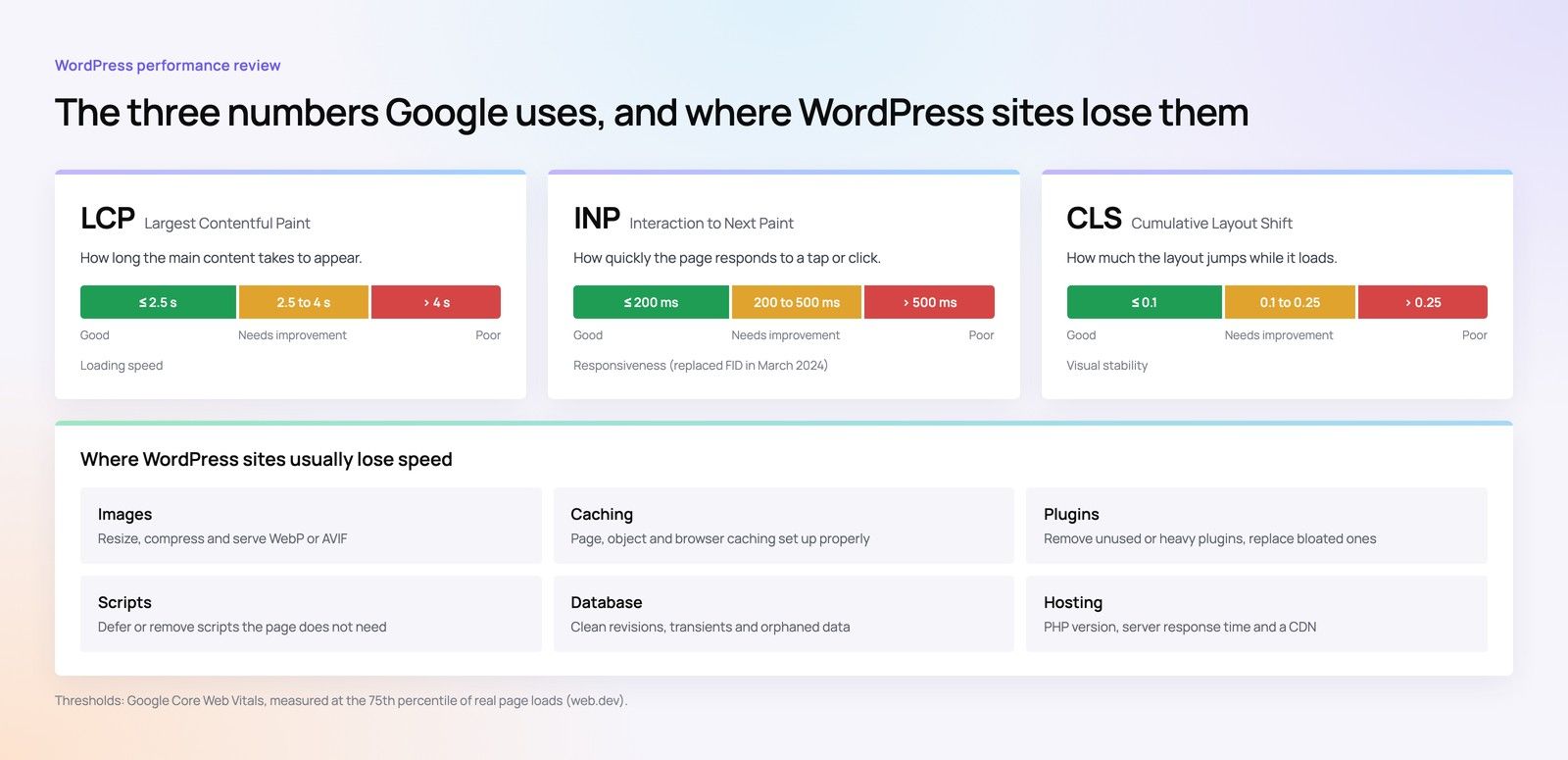
Technical SEO is the foundation. It covers site speed, mobile friendliness, secure HTTPS, clean URLs, a sitemap, sensible internal links, and fixing errors that stop pages from being indexed. Google measures real visitor experience with Core Web Vitals, which track loading, responsiveness, and visual stability. Our Core Web Vitals work and technical SEO review focus on exactly these issues.
On page SEO and content
On page SEO is about the words and structure of each page. That means a clear page title, a helpful meta description, headings that follow a logical order, and content that answers the searcher's question better than the alternatives. Write for people first. Search engines have become very good at recognizing content made mainly to rank rather than to help.
Off page SEO and reputation
Off page SEO covers signals from outside your site: links from relevant, respected websites, mentions of your brand, and reviews. You cannot fully control these, but you can earn them by publishing useful resources, doing good work, and asking happy customers for reviews.
SEO vs SEM: what is the difference?
Search engine marketing, or SEM, usually means paid search ads, such as Google Ads, where you pay when someone clicks. SEO earns unpaid, or organic, results.
| SEO | SEM (paid search) | |
|---|---|---|
| How you appear | Earned through relevance and quality | Bought through an ad auction |
| Speed | Builds over months | Can start the same day |
| When you stop | Results fade slowly | Traffic stops almost at once |
| Best for | Long term, steady demand | Launches, offers, and testing keywords |
Most businesses do best with both: paid search for quick results and testing, SEO for the steady demand that keeps coming. Our digital marketing team plans the two together.
SEO best practices and tips to start with
Google's own SEO Starter Guide and Search Essentials are the best free references. These are the basics that matter for most US business websites:
- One clear topic per page. Decide the main search each page should answer, and avoid two pages competing for the same thing.
- Write unique titles and descriptions. Say what the page offers in plain words people would actually search.
- Answer the question early. Put the direct answer in the first paragraph, then add detail.
- Make it fast on phones. Most searches happen on mobile, so test every key page on a phone.
- Link your own pages together. Point from related articles to the service pages they support, using descriptive link text.
- Keep content current. Update facts, dates, and examples, and remove pages that no longer help anyone.
- Measure what matters. Use Google Search Console to see which searches bring visitors, and track calls and form submissions, not only rankings.
How long does SEO take, and how do you do it well?
SEO usually takes months, not weeks, to show steady results, because search engines need time to recrawl your site and trust new content. The timeline depends on your starting point, your competition, and how consistently the work is done.
A practical way to start:
- Audit what you have. Find technical problems, thin pages, and missed opportunities. Our website audit and visibility audit are built for this.
- Fix the foundation. Speed, mobile layout, indexing, and redirects come before new content.
- Research what customers search. Group keywords by intent and give each group one page.
- Improve and publish pages. Start with service pages close to a buying decision, then add helpful guides.
- Review monthly. Look at Search Console and leads, and adjust the plan.
If your site needs a rebuild to get the foundation right, our website development team builds with SEO in the templates from day one.
How Codeeo helps with SEO
Codeeo has delivered over 200 projects across the UAE and the US, with a team of more than 80 people in Dubai, Riyadh, and Karachi, and is rated 4.7 from 23 Google reviews. Our SEO and digital marketing work covers technical fixes, content, and local SEO, with reporting tied to leads rather than rankings alone. When you are ready, talk to our team.
Frequently asked questions
SEO, or search engine optimization, means improving your website so search engines like Google can find it, understand it, and show it to people searching for what you offer.
It includes making the site fast and easy to crawl, writing pages that answer real questions, and earning trust through links and reviews. The goal is more of the right visitors without paying for each click.
SEO stands for search engine optimization.
The term describes the practice of improving a website's visibility in unpaid search results on Google, Bing, and other search engines. People sometimes use SEO to mean the person doing the work, as in "search engine optimizer," but most of the time it refers to the practice itself and the strategy behind it.
Search engines crawl the web to discover pages, index them to understand what each is about, and rank them when someone searches.
SEO helps at each step: technical work makes your pages crawlable and fast, content work makes each page the clearest answer to a specific search, and reputation work, such as links and reviews, shows that others trust your business.
SEO earns unpaid, organic search results by improving your website's relevance and quality.
SEM usually means paid search ads, such as Google Ads, where you pay for clicks and can appear the same day. SEO builds slowly but keeps working, while paid traffic stops when the budget does. Most businesses get the best results by using both together.
Most sites see meaningful SEO progress over several months rather than weeks.
Search engines need time to recrawl changes and build trust in new pages, and competitive searches take longer than niche ones. Fixing technical problems often shows results sooner, while new content and reputation building compound over time. Treat SEO as ongoing work, reviewed and adjusted every month.
Yes, many small businesses handle the basics themselves using Google's free SEO Starter Guide and Search Console.
Writing clear page titles, answering customer questions, keeping your Google Business Profile current, and asking for reviews all help. Bring in specialists when technical problems, a site migration, or strong competition make progress slow, or when you no longer have time to do it consistently.
SEOSEO Web Design: Building a Website That Ranks From Day OneWhat SEO web design involves, what technical SEO means for a new site, how to protect rankings in a redesign, and what to ask a web design service. SEOSEO and Social Media: How They Work Together in 2026How social media supports SEO, what social media SEO means on TikTok, Instagram and YouTube, and how to plan search and social as one system.
 SEOSEO Pricing: What Drives the Cost of SEO ServicesHow SEO pricing works, what drives the cost of SEO services, local SEO pricing, and how US small businesses can compare SEO proposals fairly.
Tell us what the business needs. We will tell you what to build first.
Schedule a free consultation and get a written recommendation, with costs, before you commit to anything.
Get in touchPROVEN RESULTS
4.7 / 5verified reviews on Google